
What Is Chaga?
Chaga (Inonotus obliquus) is a slow-growing fungus found primarily on birch trees in the cold northern forests of Siberia, Canada, Alaska, Russia, and Northern Europe. Recognized by its dark, rugged exterior and rich amber interior, wild chaga develops naturally over many years in some of the world’s harshest climates.
For generations, Chaga has been traditionally prepared as a tea and valued as part of daily wellness rituals. Today, it continues to be appreciated for its naturally occurring compounds that support immune health, help protect cells from oxidative stress and promote overall wellness.
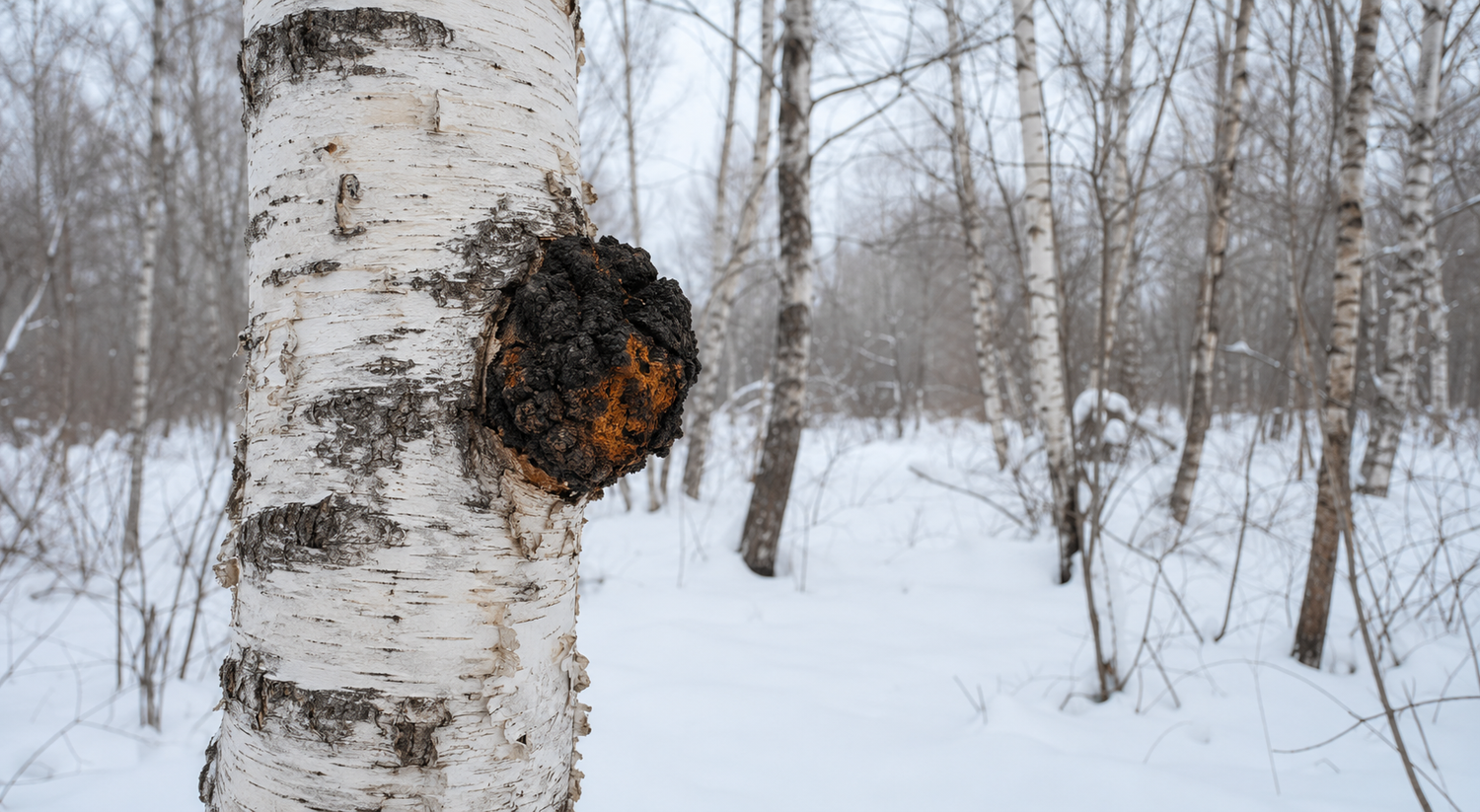
Born in the Cold
Wild chaga thrives in northern forests where prolonged winters and extreme temperatures shape its slow natural development. It forms primarily on mature birch trees, gradually developing its distinctive dark exterior over many years.
These demanding conditions are central to the story of wild chaga and help distinguish it from ordinary cultivated mushrooms.
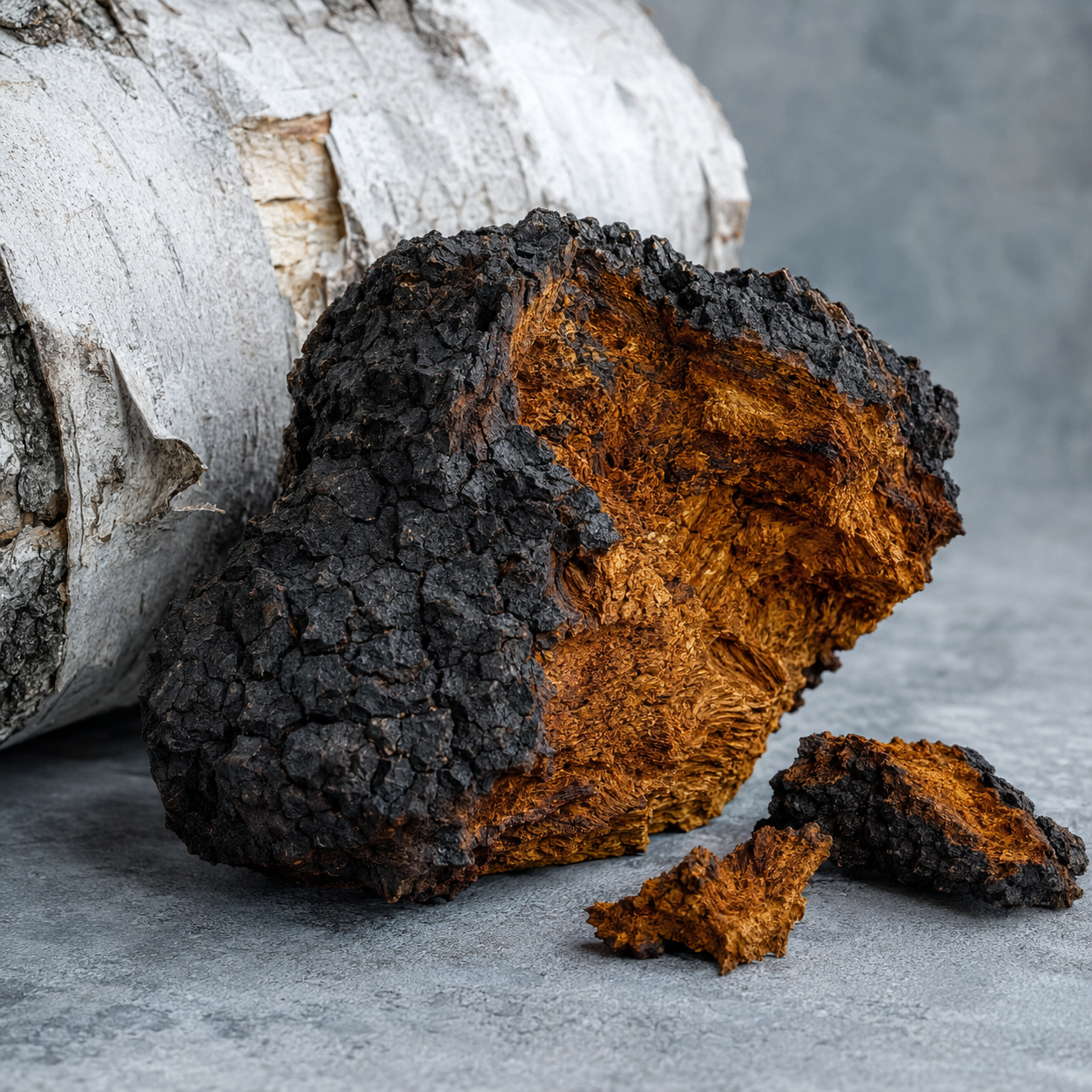
Inside Wild Chaga
Growing slowly on birch trees over many years, wild chaga develops a complex composition of naturally occurring compounds, including beta-glucans, polysaccharides, triterpenes and melanin.
Together, these substances make up more than 215 phytonutrients, developed over decades of slow, natural growth.
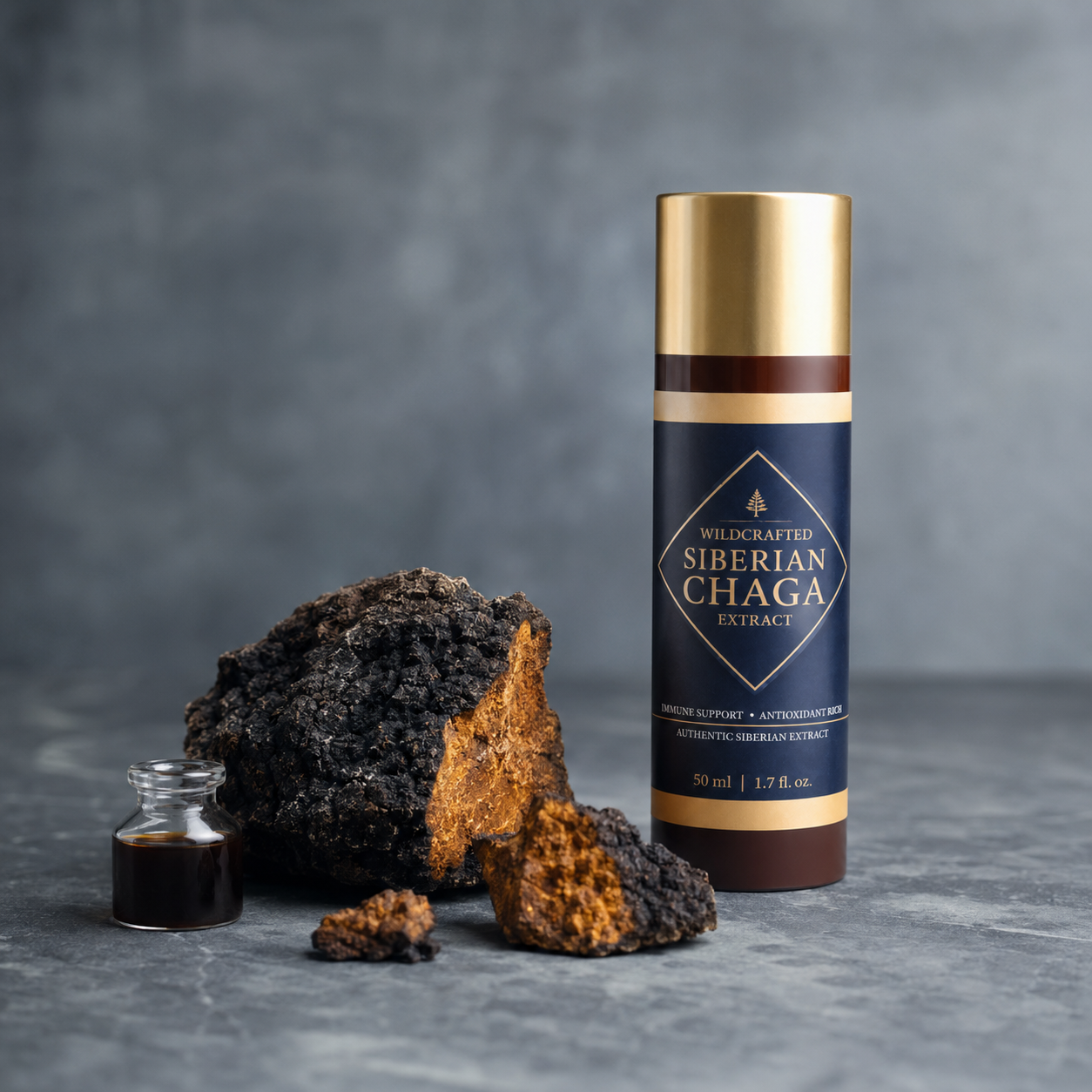
How Chaga Works
Chaga’s natural compounds work together to support the immune system and help protect cells from everyday oxidative stress. This results in well-rounded support for the body’s natural defenses and overall wellness.
Because many of chaga’s beneficial compounds are water-soluble, extraction is essential. Our water-only extraction process draws these compounds from the raw chaga and concentrates them into a convenient liquid form—without alcohol, preservatives or unnecessary additives.
What Defines Quality Chaga
The quality of a chaga extract is shaped long before it reaches the bottle. Where the chaga grows, how long it develops, how it is selected, and the way its natural compounds are extracted can all influence the finished product.
Collapsible content
Where and How Was It Grown?
Quality begins with the source. Look for wild chaga that developed naturally on birch trees in cold northern forests. The host tree, climate and growing environment all contribute to the character of the harvested chaga.
Was It Given Time to Mature?
Wild chaga develops slowly over many years. As it matures on the birch tree, it forms its dense, charcoal-colored exterior and complex natural composition. A mature growth provides a stronger starting point than chaga harvested prematurely.
How Was the Chaga Selected?
Not every harvested growth is identical. Its maturity, condition and composition can vary. Quality producers carefully select their raw chaga and clearly explain the standards used to accept or reject harvested material.
How Was It Extracted?
Raw chaga’s compounds must be released into a usable form. The extraction medium, temperature, pressure and processing time can all affect the finished extract. Look for a company that clearly explains its method and avoids unnecessary processing.
What Should Be on the Ingredient List?
Read the complete ingredient list and check for alcohol, preservatives, fillers, sweeteners and other unnecessary additives. The highest-quality water-based chaga extract keeps the formula simple: wild Siberian chaga extract and energized purified water—nothing else.
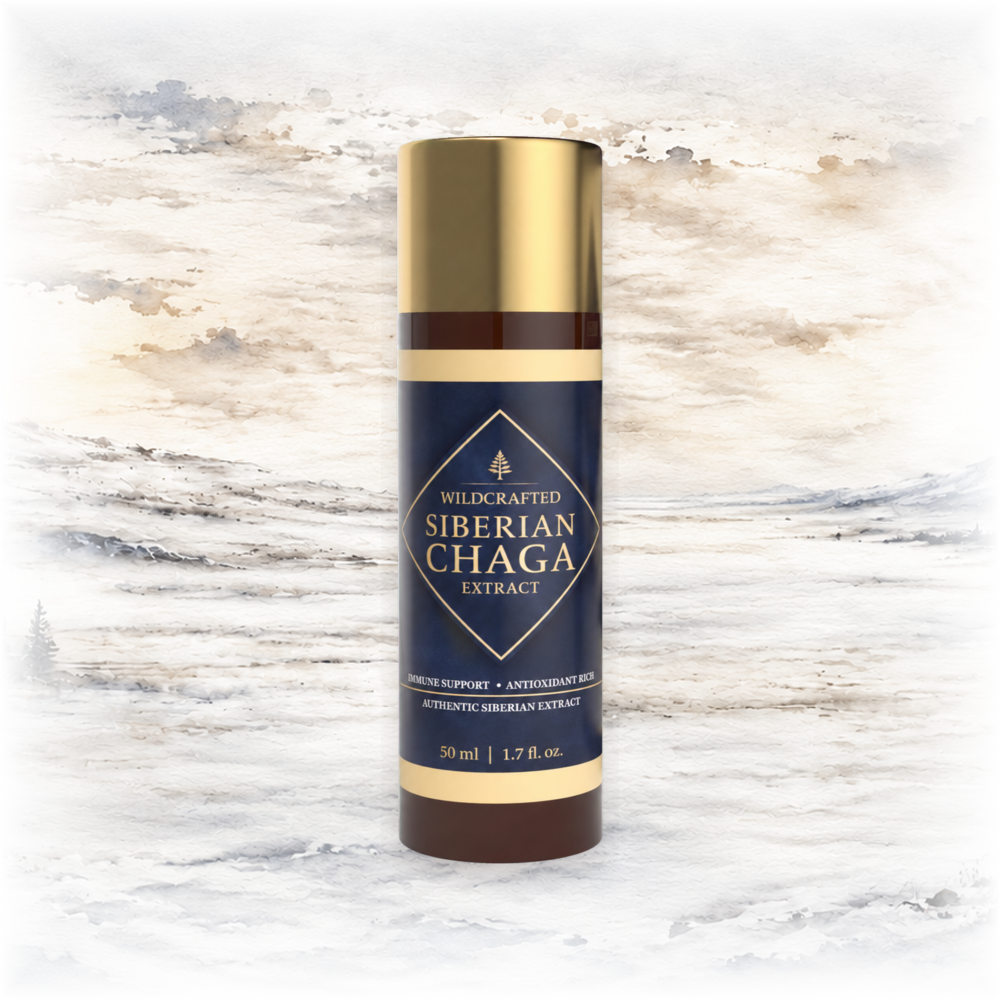
Our Chaga Standard
From its wild Siberian origin to its pure two-ingredient formula, My Real Chaga is made with quality at every step.
✓ Decades of natural growth
✓ Water-only extraction
✓ No alcohol or preservatives
✓ Only two ingredients

Want to Learn More About Chaga?
Explore this detailed guide by Ron McDow, M.D., covering:
- The history and traditional uses of wild chaga
- What makes wild chaga nutritionally unique
- Naturally occurring compounds found in chaga
- Scientific research surrounding chaga
- Chaga’s relationship with different body systems
- The importance of sourcing and extraction